
For many commercial and industrial sites, the master key is still the main security control.
It works until a key goes missing, a staff member leaves, or a contractor holds on to access they no longer need. At that point, most businesses have no record of who entered where, and no quick way to fix it.
Electronic access control replaces that uncertainty with individual credentials, scheduled doors and a clear record of every entry. Here's what changes, where it matters most, and how to upgrade without disrupting the site.
The hidden cost of mechanical keys
Keys rarely fail in an obvious way. The cost builds quietly over time.
- Lost or unreturned keys often mean rekeying multiple doors
- There is no record of who opened a door, or when
- Staff turnover and contractor access are difficult to manage
- Restricted areas such as comms rooms and stores are hard to control
- Keys can be copied without the business ever knowing
Every missing key raises the same question: who has it now, and what can it open?
What electronic access control changes
Each user is issued their own credential, such as a card, fob or mobile credential. That credential only opens the doors they need, at the times they need them.
1. Access is removed instantly
When a card is lost or a person leaves, their access is cancelled in the system. There is no rekeying and no waiting for a locksmith.
2. Doors follow schedules
Doors can unlock for business hours and secure automatically afterwards. Sites no longer rely on someone remembering to lock up.
3. Every entry is recorded
The system logs which credential opened which door, and when. If something goes missing or an incident occurs, there is a clear record to review.
4. Restricted areas stay restricted
Comms rooms, stores, cash rooms and plant areas can be limited to specific people. Access can also be adjusted as roles change.
5. Alarm and access control work together
When integrated with the alarm system, authorised users can arm and disarm by credential. Door events can also be linked to nearby cameras, so an operator can see what occurred at a particular door.
6. The system grows with the site
Commercial platforms such as Inner Range Inception and Integriti allow doors, users and sites to be added over time. The system expands rather than being replaced.
Upgrading without shutting down operations
A common concern is disruption. A well-planned upgrade avoids it.
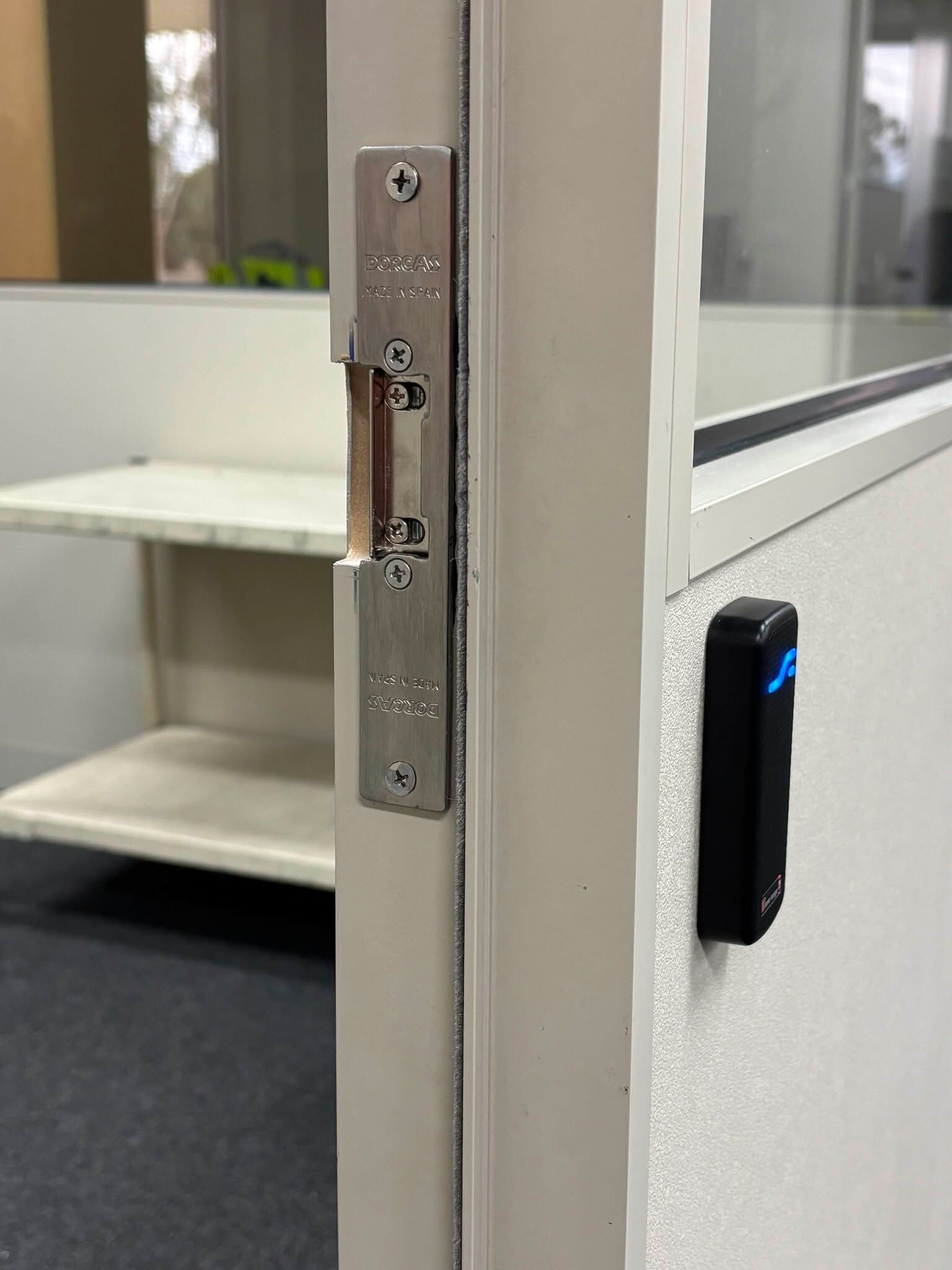
Work can be staged door by door. Existing doors can be fitted with electric strikes or cut-in locks where suitable. Operations continue while the new system comes online.
We recently delivered this approach for a global manufacturer, replacing an obsolete alarm and introducing integrated access control with no operational shutdowns. Read the project case study.
Where it makes the biggest difference
The benefits are strongest on sites with multiple entry points, shift work or regular contractor traffic.
The doors are part of the system
An access control system is only as reliable as the doors it controls. Door closers, alignment, locks and frames all affect whether a door secures properly every time.
Door hardware on exit paths must also meet the building and fire requirements that apply to the site. These are confirmed during design with the relevant parties before any work begins.
What should an access control assessment consider?
A useful assessment looks beyond the number of doors. Worth considering:
- The number of doors and gates to be controlled
- Who needs access, to which areas, and at what times
- The condition of existing locks, doors and frames
- Safe egress requirements for each controlled door
- Integration with the existing alarm and CCTV systems
- How users and credentials will be managed day to day
- Future expansion across buildings or sites
If you already have access control but it is becoming difficult to manage, see our guide to the signs your commercial security system is due for an upgrade.
Commercial access control systems
In Line Electronics designs, installs, services and upgrades access control systems for commercial and industrial sites across Melbourne and the Mornington Peninsula.
Discuss Your Access Control Requirements
If your site still relies on keys, or your existing access control is no longer practical to manage, In Line Electronics can assess the doors, users and risks and recommend a staged approach.
Get in Contact