
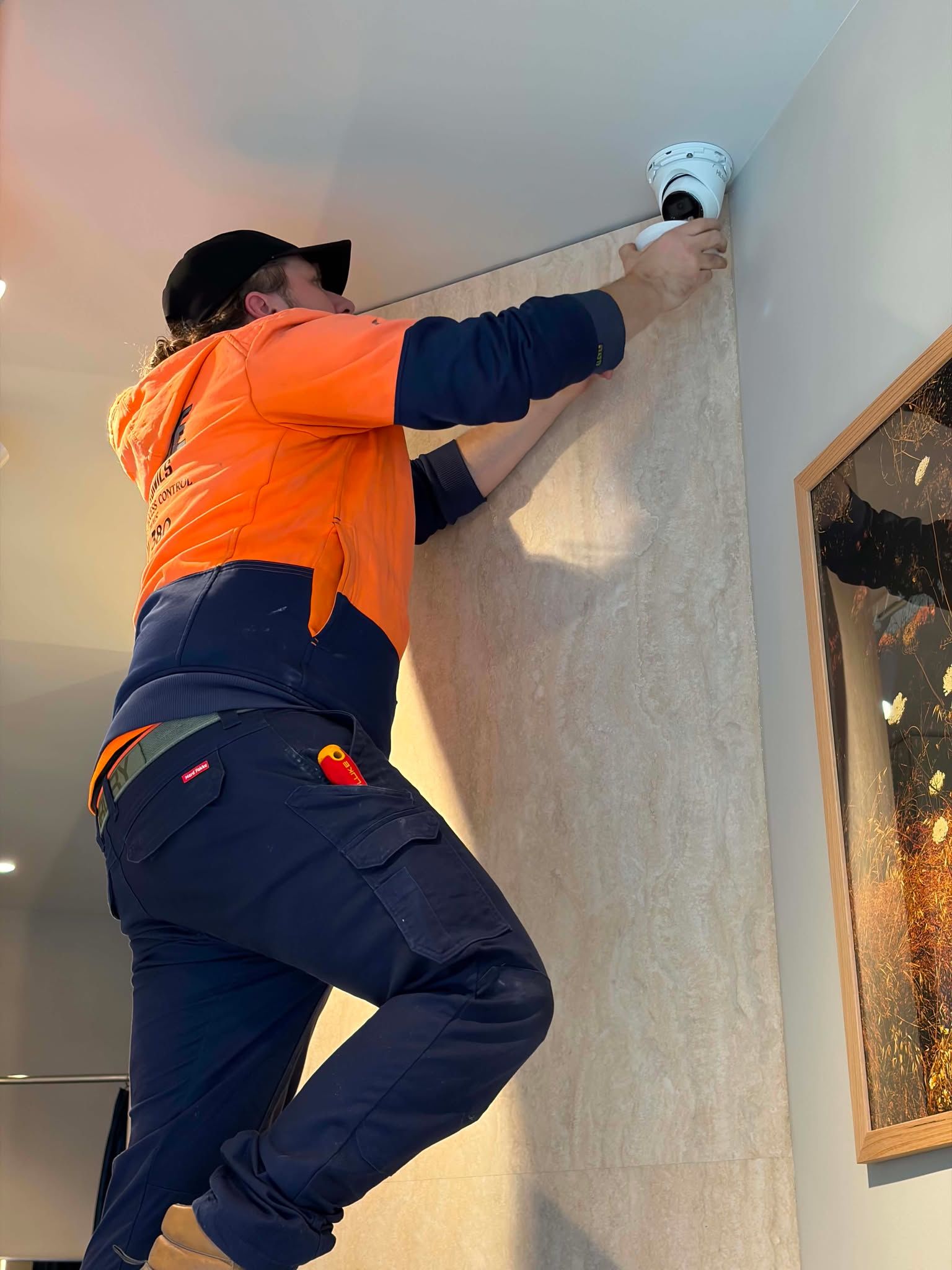
Retail theft in Victoria has reached a record high.
Crime Statistics Agency data for the 12 months to June 2026 recorded 96,008 offences at Victorian retail locations. That is around 263 offences every day. Thefts from retail stores reached a record level, and more than 5,000 assaults were recorded at retail locations over the same period.
With peak trading season approaching, retailers are under more pressure than ever. Good electronic security will not stop every incident, but it can deter offenders, protect staff and give the business the information it needs when something does happen.
Theft is only part of the problem
Retail crime affects more than stock levels. It affects staff safety, trading hours, insurance and the customer experience.
- Shoplifting on the shop floor
- Theft from stockrooms, receiving areas and deliveries
- Threatening or aggressive behaviour toward staff
- After-hours break-ins targeting stock and cash
- Internal losses that are difficult to trace
An effective retail security system should address each of these, not just the front door.
1. Camera coverage that matches how theft happens
Many retail CCTV systems provide a general view of the store but miss the details that matter. Coverage should be designed around the points where theft and incidents actually occur.
- Entries and exits, positioned to capture clear facial detail
- High-value displays and aisles with poor sight lines
- Point of sale and cash handling areas
- Stockrooms, receiving doors and loading areas
- Car parks and rear access points
Modern cameras can also detect people and activity in defined areas and generate alerts. We covered this in more detail in CCTV Is No Longer Just for Recording Incidents.
2. Visible deterrence at the entry
Opportunistic theft relies on a store looking unwatched. A public view monitor at the entry shows customers they are on camera the moment they walk in.
Combined with clear signage, it sets expectations before anything happens.
3. Control back-of-house access
Stockrooms, cash rooms and receiving doors are often secured with a shared key or keypad code. Once a code is shared, it is no longer controlled.
Access control gives each staff member their own credential and records every entry. Access can be limited by role and time, and removed immediately when someone leaves.
Read more about moving from keys to electronic access control
4. Staff safety and duress
Protecting people comes first. Duress buttons at registers and in back-of-house areas allow staff to call for help discreetly. Where the alarm is monitored, a duress activation is sent to the monitoring centre for response.
An intercom at rear and receiving doors also allows staff to see and speak with a visitor before opening the door.
5. After-hours protection
A store is most exposed when it is closed. A monitored alarm with detection covering doors, windows, roof access and stockrooms ensures an activation is acted on, even when no one is on site.
Linking cameras to the alarm allows the event to be reviewed quickly, so a genuine break-in can be escalated with confidence.
6. Footage you can actually use
When an incident occurs, managers need to find and export the relevant footage quickly. That depends on accurate time settings, sufficient retention and a recording system that is working as expected.
A camera that is offline, or a recorder that has stopped recording, is often only discovered after an incident. Planned maintenance helps catch these faults early.
Managing multiple stores
For retailers with several stores, or shopping centres with many tenancies, centralised management makes a real difference. Authorised managers can review cameras, manage users and check system status across sites without visiting each one.
Remote access should be set up carefully, with controlled permissions, secure passwords and supported software.
Privacy and signage
CCTV in retail environments involves privacy considerations for customers and staff. Retailers should seek advice on their obligations, including signage, workplace surveillance and the handling of footage.
What should a retail security assessment consider?
Every store is different. Worth checking for:
- Where theft and incidents are currently occurring
- Camera coverage, image detail and night performance
- Entry deterrence and signage
- Stockroom, cash room and receiving door access
- Duress, intercom and staff safety measures
- Alarm detection and monitoring after hours
- Recording retention and footage export
- Multi-site management and remote access
Retail security systems
In Line Electronics designs, installs, services and upgrades electronic security for retail stores, hospitality venues and shopping centres across Melbourne and the Mornington Peninsula.
Retail, Hospitality & Shopping Centres | CCTV Systems | Alarm Systems
Discuss Your Retail Security Requirements
If theft, staff safety or after-hours break-ins are affecting your store, In Line Electronics can review your existing system and recommend practical improvements ahead of peak trading.
Get in Contact