
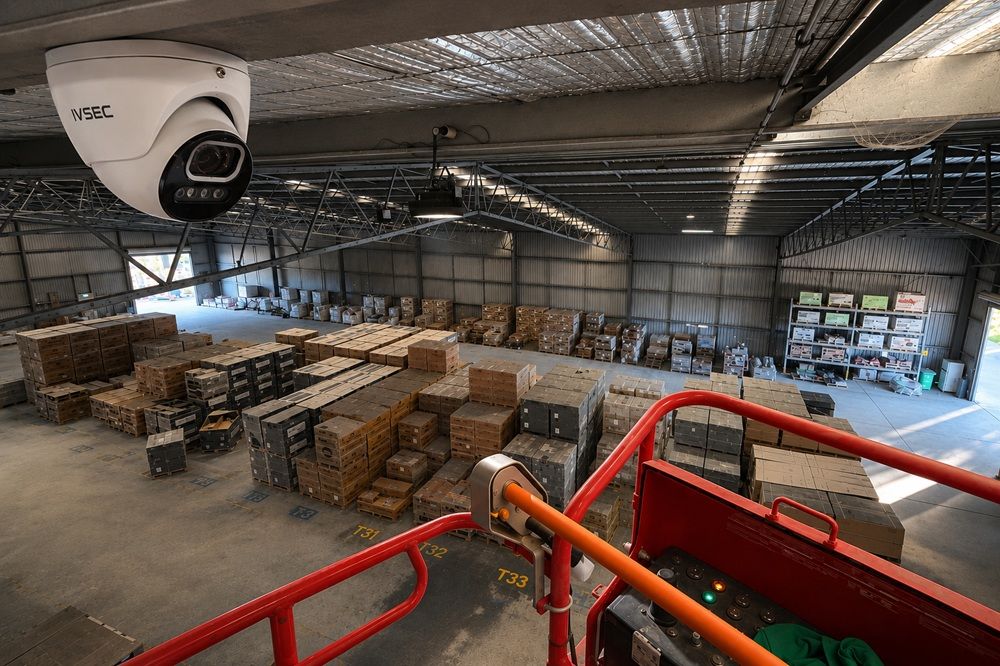
For many years, the primary purpose of a CCTV system was simple: record what happened so footage could be reviewed after an incident.
That is still an important function, but modern CCTV systems can do considerably more.
Advances in camera technology, video analytics and networked security systems mean CCTV can now help businesses identify activity as it happens, draw attention to potential security events and provide useful information about how a site is being used.
For commercial and industrial sites, this can turn CCTV from a passive recording system into a much more active part of the overall security strategy.
From recording to detection
Traditional CCTV generally relies on someone noticing an incident and then reviewing recorded footage afterwards.
Modern systems can use built-in analytics to identify specific types of activity and generate an alert when something meets a defined rule.
This does not mean every camera needs advanced analytics, or that technology can replace good security design. The value comes from selecting the right features for the risks and requirements of the site.
1. Detecting people and vehicles
Modern cameras can distinguish between people, vehicles and other movement, helping reduce the number of irrelevant alerts caused by environmental movement.
For example, a camera overlooking a loading area may be configured to identify a person entering the area outside normal operating hours. Similarly, vehicle detection can help identify activity around gates, driveways and restricted areas.
This can make CCTV more useful for sites where monitoring every camera continuously is impractical.
2. Monitoring restricted areas
CCTV analytics can also be used to monitor areas where access or movement is normally restricted. Line crossing, intrusion detection and virtual boundaries can be configured to identify when someone enters an area they should not be in.
This can be particularly useful around:
- Perimeters and fencing
- Loading docks
- Plant and machinery
- Storage areas
- Rooftop access
- Staff-only areas
- After-hours work zones
Rather than relying solely on someone reviewing footage later, the system can help draw attention to activity when it occurs.
3. Finding incidents faster
Even when an incident has already occurred, modern CCTV can make the investigation process considerably easier.
Higher-resolution cameras, improved recording systems and intelligent search functions can help operators locate relevant footage without manually reviewing hours of video. Depending on the system, footage can be searched using factors such as time, camera, movement, people or vehicles.
For a busy commercial site, reducing the time required to find a particular event can be just as valuable as improving image quality.
4. Understanding activity across a site
CCTV does not always have to be focused solely on security incidents.
Depending on the application, video analytics can provide useful information about how people and vehicles move through a site. Examples can include people counting, vehicle counting, occupancy information and activity around particular areas.
For businesses with large warehouses, commercial premises, car parks or multiple access points, this information can provide additional operational value from infrastructure that is already being used for security.
5. Connecting CCTV with other security systems
CCTV can become even more useful when it works alongside other electronic security systems.
For example, an access control event could be associated with nearby camera footage, allowing an operator to see what occurred around a particular door. Similarly, an alarm event can be used to direct attention to cameras covering the relevant area.
When CCTV, alarms and access control are designed to work together, they can provide a more complete picture of an event than any individual system can provide on its own.
6. Remote access and notifications
Modern networked CCTV systems can also provide authorised users with remote access to live and recorded footage. This can be particularly useful for businesses with multiple sites, managers who are not always on-site or facilities teams responsible for larger properties.
Depending on the system and configuration, notifications can also be generated when specific events occur.
Remote access should, however, be implemented carefully. User permissions, secure passwords, supported software, network security and the organisation's IT requirements all need to be considered. Convenience should not come at the expense of security.
7. Making better use of an existing CCTV system
One of the first questions does not necessarily need to be whether a business should replace its CCTV system. It may simply be whether the existing system is being used to its full potential.
Some systems already have features that have never been configured or are capable of supporting additional functionality through software, firmware or suitable upgrades. A review can help determine whether the current cameras, recorder, network and storage infrastructure are suitable for what the business now needs.
In some cases, a relatively targeted upgrade may provide a significant improvement without replacing the entire system.
Not sure if it's time to upgrade? See the signs to look for →
AI is a tool, not a replacement for good system design
Artificial intelligence and video analytics are becoming increasingly common in commercial CCTV systems, but the technology itself is only part of the solution.
A poorly positioned camera will still produce poor results.
Insufficient lighting, unsuitable lenses, incorrect camera heights, network limitations and inadequate recording capacity can all reduce the effectiveness of an otherwise capable system.
Good CCTV design starts with understanding the site, its risks and what the cameras actually need to achieve. Technology should then be selected to support those requirements.
What should a modern CCTV assessment consider?
A useful CCTV assessment should look beyond simply counting cameras. It should consider how the system performs today, what the business needs it to do and whether it can support future requirements.
- Current camera coverage and potential blind spots
- Image quality during both day and night
- Camera positioning, lenses and viewing angles
- Recording capacity and retention requirements
- Existing video analytics and detection capabilities
- Network infrastructure and system connectivity
- Remote access and user permissions
- Integration with alarms and access control
- Site changes that may have affected existing coverage
- Future expansion and additional security requirements
Your CCTV system may be capable of more
CCTV remains one of the most valuable security tools available to a business, but its role has changed significantly.
A modern system can provide more than a collection of recordings to review after an incident. With the right design and configuration, it can help identify activity, provide faster information during an event and integrate with other security systems across a site.
The important question is not simply “Do we have CCTV?” It is “Is our CCTV doing what we need it to do?”
For businesses with older systems, changing site requirements or cameras that are no longer providing the information they need, a professional assessment can help identify where improvements will provide the greatest benefit.
Commercial CCTV systems
In Line Electronics designs, installs, services and upgrades CCTV systems for commercial and industrial sites across Melbourne and the Mornington Peninsula.
Commercial CCTV Systems | Service & Maintenance | Recent Projects
Discuss Your CCTV Requirements
If your existing CCTV system is no longer providing the visibility, functionality or reliability your business needs, In Line Electronics can assess the existing installation and recommend a practical upgrade approach.
Get in Contact